
بحث جديد: ازدهر المزيد من الجيل Z عبر الإنترنت في عام 2025 مع ازدهار الرفاهية الرقمية
9 فبراير 2026
استمتع ما يقرب من ستة من كل عشرة أعضاء من الجيل Z بالرفاهية الرقمية "العالية" أو "العالية جدًا" في عام 2025، وارتفع عدد أولئك من هم "في حالة ازدهار تام" عبر الإنترنت إلى أكثر من واحد من كل عشرة - وهي أكبر نسبة تصل إلى هذا المستوى منذ بدء الدراسة، حسبما تظهر الأبحاث الجديدة.
كان 45 بالمائة من المشاركين من الجيل Z "مزدهرين" عبر الإنترنت العام الماضي و13 بالمائة منهم "في حالة ازدهار تام"، ما يمثل زيادة قدرها نقطة مئوية واحدة وثلاث نقاط مئوية، على التوالي، مقارنة بنتائج العام السابق. تشير قراءة الفئة المزدهرة إلى التجارب عبر الإنترنت "الإيجابية للغاية" بشكل عام، في حين تشير الفئة التي في حالة الازدهار التام إلى تفاعلات وأنشطة إيجابية للغاية. سجل أكثر من الثلث بقليل (36%) من المشاركين تجارب متوسطة أو متوسطة النطاق، و6% من الأشخاص يعتبرون أنهم يواجهون صعوبة، ما يعني أنهم أفادوا بتعرضهم المستمر لتجارب ونتائج سلبية عبر الإنترنت. وانخفضت فئة التجارب المتوسطة وفئة الأشخاص الذين يواجهون صعوبة بثلاث نقاط مئوية ونقطة مئوية واحدة على التوالي، مقارنة بعام 2024.
قال لاري ماغيد، الرئيس التنفيذي لشركة ConnectSafely: "من المشجع رؤية المزيد من الشباب الذين يعيشون حالة ازدهار تام عبر الإنترنت على الرغم من التحديات المستمرة والسرديات الشائعة المتشائمة التي تركّز على "التشاؤم والكآبة". "ومن المثير للاهتمام أن الأبحاث تُظهر أن أولئك الذين يزدهرون هم في كثير من الأحيان الأكثر انخراطًا في الحياة الرقمية. وبفضل الدعم الصحيح والحوار المفتوح بين المراهقين والآباء، يمكن للشباب التنقل في هذه المساحات بمسؤولية وتحويل تفاعلاتهم عبر الإنترنت إلى تجارب إيجابية وصحية
وعلى مدار السنوات الأربع الماضية، أجرت سناب أبحاثًا عبر المنصات في الرفاهية الرقمية ونشرت النتائج الكاملة في يوم الإنترنت الأكثر أمانًا (SID). وتعمل النتائج بمنزلة مساهمة أساسية في النظام البيئي التكنولوجي العام وتضاف إلى قاعدة الإثبات، التي تساعدنا جميعًا في المساعدة على إنشاء تجارب رقمية أكثر أمانًا وصحة وأكثر إيجابية للجميع. ستجري سناب هذه الدراسة تحديدًا لمدة عام آخر (2026) وستصدر السنة الخامسة والأخيرة من النتائج على SID 2027. يغطي البحث تجارب المراهقين والشباب من الجيل Z على جميع المنصات والخدمات والأجهزة، مع عدم التركيز بشكل خاص على سناب شات.
وسائل التواصل الاجتماعي: وجود مشترك بين من هم في حالة ازدهار تام
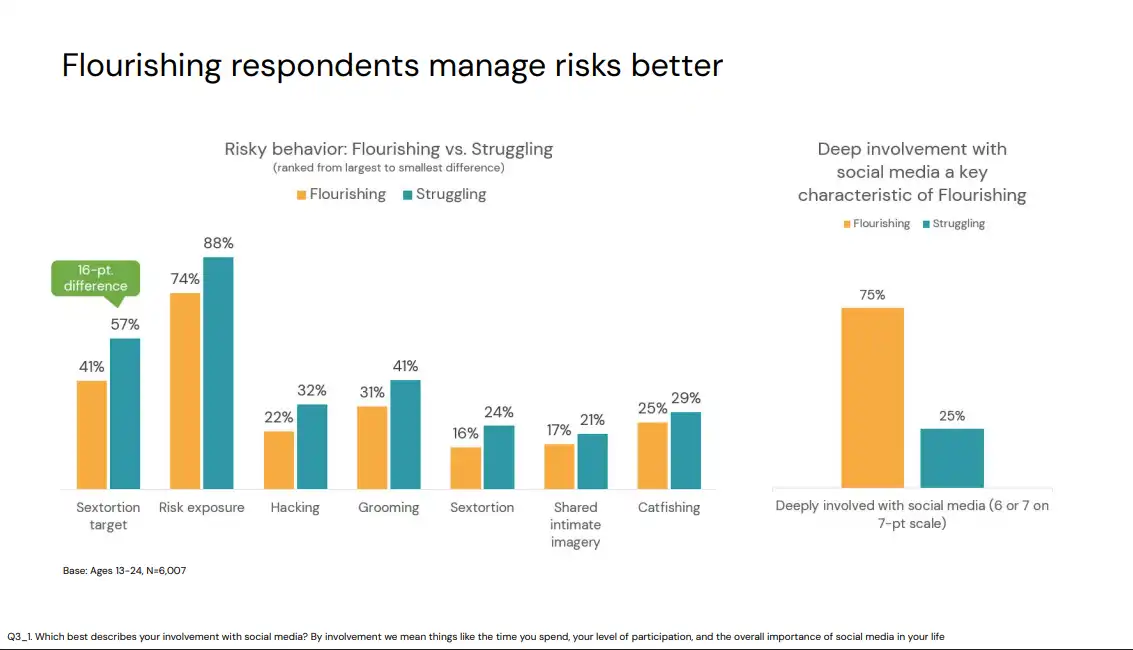
تُظهر النتائج أن الجيل Z الذي يتميز بمستوى الرفاهية الرقمية الأعلى هم أكثر براعة في إدارة المخاطر عبر الإنترنت والتعامل معها. على سبيل المثال، أفاد 74% من الأشخاص في فئة من هم في حالة ازدهار تام بأنهم تعرضوا لبعض المخاطر عبر الإنترنت في العام الماضي، في حين أفاد ما يقرب من تسعة من كل عشرة (88%) ممن وُصفوا بأنهم يواجهون صعوبة بأنهم واجهوا بعض المخاطر عبر الإنترنت – بفارق 14 نقطة مئوية.
وتوسعت هذه الفجوة لتصبح 16 نقطة مئوية عند النظر في الابتزاز الجنسي المحتمل عبر الإنترنت. يُظهر الرسم البياني أدناه أولئك الذين ينتمون إلى هاتين الفئتين وتجاربهم في السلوكيات المحفوفة بالمخاطر المعروفة بأنها بوابات محتملة للابتزاز الجنسي - مثل القرصنة والاستمالة عبر الإنترنت للأغراض الجنسية وانتحال الشخصية.
بالإضافة إلى ذلك، تُظهر النتائج أن "الانخراط بعمق" مع وسائل التواصل الاجتماعي كان ميزة رئيسية بين أولئك الذين يعيشون حالة ازدهار تام عبر الإنترنت. أفاد ثلاثة أرباع المشاركين في فئة من هم في حالة ازدهار تام أنهم منخرطون بشكل كبير في وسائل التواصل الاجتماعي، بما في ذلك الوقت الذي يقضونه ومستوى المشاركة والأهمية العامة لوسائل التواصل الاجتماعي في حياتهم. وبالنسبة إلى أولئك الذين تم تصنيفهم على أنهم يواجهون صعوبة، قال الربع فقط (25%) أنهم منخرطون بعمق في وسائل التواصل الاجتماعي. هذه النتائج موضحة أيضًا في الرسم البياني أدناه.
وتعد النتائج جزءًا من الأبحاث المستمرة التي تجريها سناب حول الرفاهية الرقمية لجيل Z وتمثل أحدث إصدار من مؤشر الرفاهية الرقمية (DWBI)، وهو مقياس عام لكيفية قيام المراهقين (من 13 إلى 17) والشباب (من 18 إلى 24) عبر الإنترنت في ست دول: أستراليا وفرنسا وألمانيا والهند والمملكة المتحدة والولايات المتحدة. كما أجرينا استطلاعًا لآباء الأطفال الذين تتراوح أعمارهم بين 13 و19 عامًا حول تجارب المراهقين مع المخاطر عبر الإنترنت. تم إجراء أحدث استطلاع للرأي بين 29 أبريل و10 مايو 2025، وشمل استطلاعًا على 9,037 مشاركًا في ثلاث مجموعات عمرية وست مناطق جغرافية.
فيما يلي بعض النتائج الإضافية رفيعة المستوى من العام الرابع:
وفي البلدان الست، استمر التعرض للمخاطر عبر الإنترنت بين الجيل Z في الزيادة في عام 2025، حيث قال 8 من كل 10 مُشاركين (81%) أنهم تعرضوا لبعض المخاطر - بزيادة نقطة مئوية واحدة (80%) مقارنة بعام 2024 وخمس نقاط مئوية (76%) منذ بدء هذا البحث عام 2022.
التعرض للأخبار المزيفة 1/كانت المعلومات المضللة (54%) وتهديدات العنف (47%) والاتصال غير المرغوب فيه (35%) كانت الثلاثة مخاطر الرقمية الأكثر شعبية في عام 2025، بما يتفق مع نتائج الأعوام الثلاثة السابقة. انتحال الهوية عبر الإنترنت (30%) والمخاطر الجنسية (29%) حددت أكثر المخاطر الخمسة الأكثر شيوعًا.
ولأول مرة منذ بدء الدراسة، سألنا الجيل Z عن تجربتهم، إن وجدت، مع عمليات تجنيد العصابات المحلية ومجموعاتها. قال 4 في المائة من المشاركين في البلدان الستة أنهم عانوا هذا المخاطر، وهو أدنى نوع من المخاطر التي تواجههم من بين 15 دولة شملتها الدراسة.
وبشكل مشجع، تواصل المزيد من المراهقين أكثر من أي وقت مضى للحصول على المساعدة بعد التعرض لأحد المخاطر عبر الإنترنت. قال أكثر من 7 من 10 أشخاص (71%) أنهم تحدثوا مع شخص ما أو طلبوا المساعدة، ارتفاعًا عن 68% في عام 2024 و59% في عام 2023. قال 9 من كل 10 آباء (88%) إن ابنهم المراهق أبلغهم بحادث خطر، مما يمثل زيادة نقطتين مئويتين عن كل عام من الأعوام الثلاثة السابقة (86%). ومع ذلك، استمر عدد أقل من المراهقين في التقدم لمناقشة المخاطر الخطيرة مثل إيذاء النفس والتعرض للمحتوى المتطرف العنيف أو الإرهابي. (لم يكن هناك تغيير أساسًا في تجربة المراهقين مع هذه المخاطر الكبيرة.)
كما هو الحال في الدراسات السابقة، ما تزال أحدث النتائج تُظهر أن الجيل Z مع المزيد من أصول الدعم المتاحة لهم يستمتعون برفاهية رقمية أقوى. يتم تعريف أصل الدعم على أنه شخص في المنزل أو المدرسة أو العمل أو في المجتمع الأوسع نطاقًا الذي يمكن للشاب الاتصال به عندما يكون لديه مشكلة أو قلق، والذي سيستمع إليه، أو يعتقد أن الشاب سيحقق نجاحًا في الحياة. من بين الجيل Z الذين لديهم ما بين تسعة و12 أصلاً داعمًا (أعلى مجموعة)، كان الثلثين تقريبًا من فئة من هم في حالة ازدهار تام (64%). من بين أولئك الذين لديهم من صفر إلى أربعة أصول دعم (الأدنى في مجموعة)، كان أكثر من ثلاثة أرباع (77%) في مجموعة الذين يواجهون صعوبة.
يبدو أن العديد من هذه النتائج تشير إلى أنه على الرغم من زيادة التعرض للمخاطر، فإن الكثير من أبناء الجيل Z يزدادون مرونة بشكل متزايد ويستفيدون من أدوات وموارد متنوعة لمساعدتهم في معالجة المشكلات عبر الإنترنت. وتؤكد هذه المؤشرات على الحاجة المستمرة لتعزيز الثقافة الرقمية ووسائل التواصل الاجتماعي، وزيادة التركيز على تطوير مهارات التحليل والتفكير النقدي وتقويتها.
العام 4 من مؤشر الرفاهية الرقمية
يمنح مؤشر الرفاهية الرقمية درجة تتراوح بين 0 و100 لكل مشارك بناءً على مدى موافقته على مجموعة من عبارات تقييم المشاعر. ثم تُستخدم درجات المشاركين الفردية لحساب درجات خاصة بكل بلد ومتوسط الدرجات عبر ستة بلدان. بمعدل عام عبر جميع المناطق الجغرافية الست، سجل مؤشر الرفاهية الرقمية لعام 2025 ارتفاعًا بنقطة واحدة ليصل إلى 64 مقارنة بـ 63 في عام 2024. وبشكل عام، لا يزال هذا المستوى متوسطًا، لكنه إيجابي بشكل صافي بالنظر إلى ارتفاع معدل التعرض للمخاطر بين المراهقين. (أفاد ثلاثة أرباع المراهقين (76%) بتعرضهم لمخاطر في عام 2025، مقارنة بـ 73% في العام السابق؛ بينما انخفض تعرض الشباب البالغين للمخاطر نقطة مئوية واحدة ليصل إلى 86% نزولاً من 87% في عام 2024.)
وللعام الرابع على التوالي، سجلت الهند أعلى نتيجة من مؤشر الرفاهية الرقمية عند 69، بزيادة نقطتين عن عام 2024 مما يجعلها أعلى قراءة تسجلها أي دولة حتى الآن. تستند قراءات مؤشر الرفاهية الرقمية المرتفعة باستمرار في الهند إلى ثقافة الدعم الأبوي الواعي والمتفاعل. وارتفع مؤشر الرفاهية الرقمية في الولايات المتحدة إلى 67، وهو ما يمثل أيضًا ذروة القراءة في هذا البلد منذ بدء الدراسة وارتفاع نقطتين عن عام 2024. ارتفعت القراءة في جميع المقاطعات أكثر من العام السابق. مؤشرات الرفاهية الرقمية في المملكة المتحدة وفرنسا وألمانيا تبلغ 64 و60 و61 على التوالي. استعاد مؤشر الرفاهية الرقمية في أستراليا مستواه ليسجل 63 بعد أن كان البلد الوحيد الذي شهد تراجعًا طفيفًا في عام 2024.
يعتمد المؤشر على نموذج PERNA، وهو تكييف لنظرية راسخة في مجال الرفاهية 2, الذي يتألف من 20 عبارة عاطفية عبر خمس فئات: العاطفة الإيجابية (P)، والمشاركة (E)، والعلاقات (R)، والمشاعر السلبية (N)، والإنجازات (A). ومع مراعاة جميع تجاربهم عبر الإنترنت على أي جهاز أو تطبيق - وليس فقط سناب شات - على مدار الأشهر الثلاثة السابقة، طُلب من المشاركين تسجيل مستوى اتفاقهم مع كل من العبارات العشرون. على سبيل المثال، "شعرت عمومًا أن ما قمت به عبر الإنترنت كان قيمًا وجديرًا بالاهتمام"، في فئة المشاعر الإيجابية، و"لدي أصدقاء يستمعون لي حقًا عندما يكون لدي شيء أقوله عبر الإنترنت"، في فئة العلاقات. (راجع هنا للحصول على القائمة الكاملة لعبارات تقييم مشاعر مؤشر الرفاهية الرقمية الـ 20.)
المراهقون في الولايات المتحدة: تقدّم بطلب للانضمام إلى المجموعة الثانية من مجلس الرفاهية الرقمية لدينا
منذ عامين، ولإضفاء الحيوية على هذا البحث وتعزيز التزامنا المستمر تجاه المراهقين على الإنترنت، أطلقنا مجلس الرفاهية الرقمية الأول، وهو برنامج تجريبي للمراهقين من سن 13 إلى 16 عامًا في الولايات المتحدة. في أغسطس الماضي، اختتمنا أعمال المجلس الأول، وقد أدى نجاحه إلى إنشاء مجلسين "شقيقين" نشطين في أستراليا وأوروبا والمملكة المتحدة. نحن متلهفون لوجود مجموعة ثانية في الولايات المتحدة، لذلك بدأنا عملية تقديم الطلبات هذه الشهر الماضي. إذا كنت مراهقًا أو تعرف مراهقًا يتحمس لتحسين التجارب الرقمية للجميع، ففكّر في التقديم! يمكن العثور على التفاصيل هنا.
وأخيرًا، يسر سناب الانضمام مرة أخرى إلى ConnectSafely، المنظم الرسمي ليوم الإنترنت الآمن في الولايات المتحدة، في الحدث الوطني لهذا العام في ساكرامنتو بولاية كاليفورنيا. ويهدف يوم الإنترنت الآمن الذي يُحتفل به في أكثر من 100 دولة، إلى تمكين الشباب والبالغين من استخدام التكنولوجيا بمسؤولية وباحترام ونقدية وإبداع، ونخطط لمشاركة بعض هذه النتائج البحثية الأخيرة لمواصلة المساعدة في توجيه الحوار العالمي.
وللمزيد من المعلومات حول أحدث إصدار من مؤشر الرفاهية الرقمية والبحث، راجع موقعنا الإلكتروني، والدليل التفسيري المحدث، ونتائج البحث الكاملة، والرسوم البيانية المعلوماتية المخصصة لكل دولة من الدول الست: أستراليا وفرنسا وألمانيا والهند والمملكة المتحدةوالولايات المتحدة.
— جاكلين بوتشير، الرئيس العالمي لسلامة المنصّة